
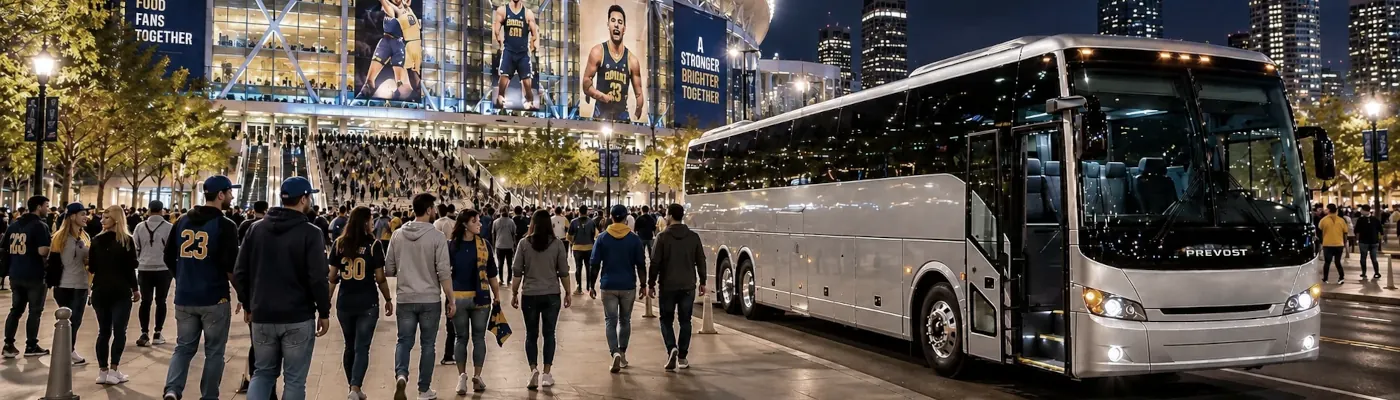
Build One Master Transportation Plan
Tournament transportation can involve several teams, multiple hotels, practice facilities and competition venues operating on different schedules. Instead of planning each trip in isolation, begin with one master transportation plan that shows how every passenger group and vehicle fits into the event.
List all known arrival times, practices, games, meal movements, hotel transfers and departure requirements. This creates a framework that can be adjusted as tournament schedules develop.
Give each team or passenger group a clear name in the transportation plan. Matching that name to its hotel, vehicle, pickup point and schedule makes a multi-vehicle operation much easier to follow.
MULTIPLE TEAMS & VEHICLES
Assign Transportation by Passenger Group
Teams
Keep each roster, coaching staff and equipment requirement connected to the correct transportation assignment.
Vehicles
Number or label vehicles when several buses are operating so teams and coordinators can quickly identify the correct one.
Equipment
Account for luggage, uniforms, coolers, training supplies and sport-specific equipment when assigning vehicle capacity.
Timing
Teams competing at different times may need separate departure windows even when they share a hotel or venue.
HOTELS & VENUES
Plan Routes Around the Tournament Footprint
A tournament may use one venue or a network of fields, arenas and training locations. Map the hotels and venues together before assigning routes so travel times and repeated transfers can be planned realistically.
- Identify every hotel. Confirm the exact property and designated group pickup area.
- Confirm each venue address. Large sports complexes may have multiple entrances, fields or buildings.
- Use required arrival times. Teams often need to arrive well before their scheduled competition.
- Include practice facilities. Training sessions and warm-up locations can create additional transportation movements.
- Plan meals and special events. Team dinners, ceremonies or other tournament functions should be part of the itinerary when transportation is needed.
VENUE OPERATIONS
Confirm Loading, Parking and Staging Areas
When several buses arrive at the same time, the physical movement of vehicles becomes part of the tournament plan. Clear loading and staging instructions can reduce confusion for teams, drivers and event staff.
Confirm:
- Bus entrance and exit
- Team unloading location
- Equipment unloading area
- Bus parking or staging location
- Post-game pickup point
- On-site transportation contact
FLEXIBLE SCHEDULING
Prepare for a Tournament Schedule That Moves
Bracket results, overtime, weather and venue operations can shift competition times. Transportation planning should identify who is authorized to communicate schedule changes and how updated information will reach drivers, teams and event coordinators.
When possible, share potential game windows in advance rather than only the first confirmed matchup. The transportation provider can then understand where later movements may be needed, although vehicle and driver availability and applicable operating requirements will still determine what changes can be accommodated.
Use One Point of Contact for Transportation
Large tournaments generate a lot of communication. A designated transportation coordinator can reduce conflicting instructions by serving as the central contact between tournament organizers, team representatives and the transportation provider.
For larger operations, a simple vehicle assignment sheet can list each bus, driver contact process, team or passenger group, hotel, venue and current schedule. Keeping that information in one place makes updates easier to manage throughout the event.
COMMON QUESTIONS
Tournament Transportation FAQ
How many buses does a tournament need?
The number depends on team sizes, simultaneous movements, hotel locations, venue schedules, equipment requirements and whether vehicles can make more than one trip. A complete tournament schedule is needed before determining the most practical vehicle plan.
Can one bus transport more than one team?
It may be possible when passenger and equipment capacity, timing and routes allow it. Teams with overlapping schedules or different venue requirements may need separate vehicles.
Can buses shuttle continuously between hotels and venues?
Shuttle-style service can be planned when the passenger demand, route, timing and vehicle availability support it. The schedule should include realistic loading and travel times rather than assuming immediate back-to-back departures.
What if tournament game times change?
Communicate changes as early as possible through the designated transportation contact. Vehicle availability, driver scheduling and other trip requirements can affect how the revised schedule is handled.
What information should tournament organizers provide?
Provide participating groups, passenger counts, hotel and venue addresses, competition and practice schedules, required arrival times, equipment needs, loading areas and the contact responsible for transportation coordination.
PLANNING TOURNAMENT TRANSPORTATION?
Let's Coordinate the Moving Parts
Tell us about your teams, hotels, venues, event dates and schedule. New York Royal Coach can help organize transportation around the tournament.
New York Service • 24/7 Support